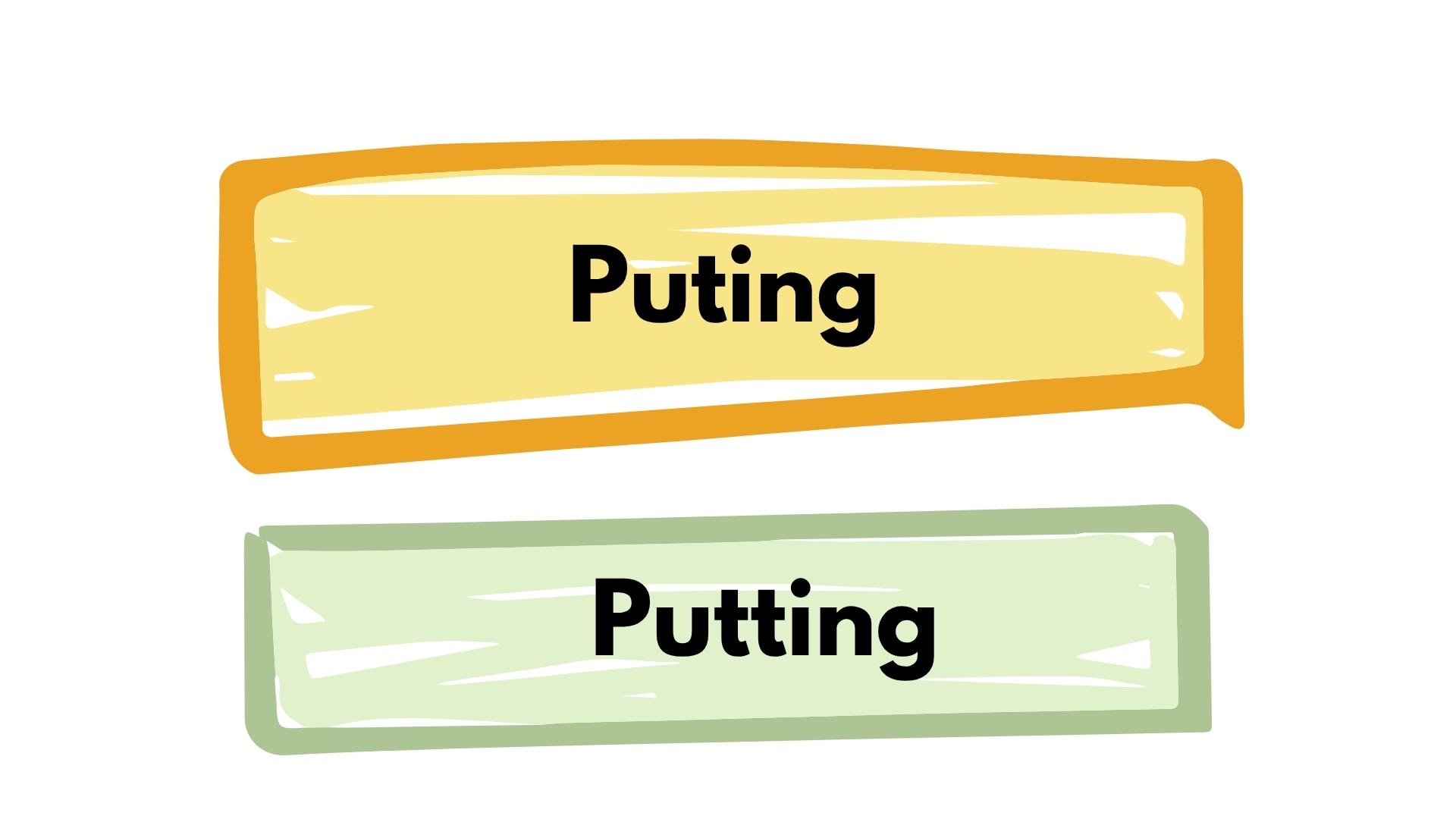
When I first typed the word into a search bar, I wasn’t sure which version was correct. Was it “puting” or “putting”? After digging into dictionaries, style guides, and real usage examples, I found a clear answer. The Puting vs Putting debate comes up more often than you’d think, especially among people typing quickly or learning English spelling rules for the first time. In this guide, I’ll walk you through exactly what I found, why the confusion happens, and how you can avoid this mistake for good.
My Quick Answer
Here’s the short version: “Putting” is the correct spelling. “Puting” is simply a common misspelling. Whether you mean placing something down or the short golf stroke, the word always takes two t‘s. If you remember one thing from this Puting vs Putting comparison, remember that.
Why I Found It’s Spelled “Putting”
Understanding the mechanics behind Puting vs Putting helped me stop second-guessing myself every time I typed the word. The reason comes down to basic English spelling mechanics. “Putting” is the present participle (the -ing form) of the verb “put.” When I looked into how English handles short verbs like this, I noticed a consistent pattern: one-syllable verbs ending in a single consonant, preceded by a single vowel, double that final consonant before adding “-ing.” That’s exactly what happens with put → putting. “Puting” skips this doubling step, which is why it looks wrong to a trained eye and why spell-checkers flag it instantly.
The CVC Rule I Follow
I rely on the CVC rule (Consonant-Vowel-Consonant) whenever I’m unsure about doubling a letter. “Put” fits the pattern perfectly: P (consonant), U (vowel), T (consonant). Because the word is stressed on that single syllable, the final consonant doubles when you add a vowel suffix like “-ing” or “-er.” That gives you “putting,” not “puting.”
This same rule explains other doubling patterns I’ve covered, similar to how I broke down laid out or layed out, where a base verb’s spelling shifts once a suffix is attached.
My Definition and Meaning Analysis
Once I confirmed the spelling, I wanted to understand every meaning of “putting” so I could use it confidently in different contexts. This part of the Puting vs Putting analysis matters most, because meaning changes with context even though the correct spelling never does. The word carries two main meanings depending on the setting.
1. Placing or Moving
In everyday use, “putting” describes the act of placing, positioning, or moving something. For example: “I’m putting the books on the shelf” or “She’s putting effort into her work.” This is the most common way the word shows up in daily conversation and writing.
2. In Golf
In golf, “putting” refers to the gentle stroke used to roll the ball into the hole on the green. A “putt” is the shot itself, and “putting” is the ongoing action or skill of making that shot. Golfers often talk about their “putting game” or practicing on a “putting green.”
The Golf Connection: A Special Case
What surprised me during my research is how often the Puting vs Putting confusion shows up specifically in golf content. Because “putt” is a shorter, less familiar word outside the sport, writers sometimes drop a letter by accident and end up with “puting” instead of “putting.” Golf instructors, bloggers, and even equipment listings occasionally make this slip, which only adds to the confusion for readers trying to learn the correct term.
Why are they spelled the same?
Interestingly, both meanings of “putting” (the general verb and the golf term) share the exact same spelling. That’s because “putt” itself already ends in a doubled consonant, so adding “-ing” doesn’t change the doubling pattern at all: putt → putting. This overlap is one more reason the correct spelling of putting stays consistent no matter which meaning you intend.
Read More: Carrer vs Career: The Correct Spelling Explained
Examples I Use
These side-by-side examples make the Puting vs Putting distinction easy to spot in real sentences.
• Correct: I’m putting my keys on the table before I forget them.
• Incorrect: I’m puting my keys on the table before I forget them.
• Correct: He improved his putting after weeks of practice on the green.
• Incorrect: He improved his puting after weeks of practice on the green.
• Correct: We’re putting together a plan for next quarter.
• Incorrect: We’re puting together a plan for next quarter.
Putting vs Puting: My Summary Table
| Aspect | Putting (Correct) | Puting (Incorrect) |
| Spelling status | Standard, dictionary-approved | Common misspelling |
| Rule applied | CVC doubling rule | Rule not applied |
| Used in golf | Yes, e.g. “putting green” | No, always an error |
| Should you use it in writing? | Yes, always | No, never |
Did you know?
Spell-checkers rarely catch “puting” as an error on its own because it can resemble a rushed typo rather than a distinct word. That’s exactly why the Puting vs Putting mix-up slips through so often, even in published content. It’s similar to how easy it is to confuse carrer or career when typing quickly without proofreading.
Frequently Asked Questions
Q1: Is “puting” ever correct?
No. “Puting” is always a misspelling. The correct word is “putting.”
Q2: Why does “put” double the T in “putting”?
Because “put” follows the CVC (consonant-vowel-consonant) pattern, the final consonant doubles before adding “-ing.”
Q3: Is “putting” used the same way in golf and everyday speech?
The spelling stays identical in both cases, though the meaning changes based on context.
Q4: How can I remember the correct spelling?
Think of “put” plus an extra “t” plus “ing.” Two T’s, every time.
Q5: Do spell-checkers always catch “puting”?
Not always. Many tools miss it, so manual proofreading still matters.
Final Thoughts
After researching this topic thoroughly, I’m confident in saying the Puting vs Putting question has one clear winner: “putting” is correct, and “puting” is not a recognized English word. Whether you’re writing about golf, describing an everyday action, or drafting a professional email, sticking with “putting” keeps your writing accurate and polished. Once you understand the CVC rule behind it,

David is the creator and author behind Healthy Leeks, a platform focused on grammar, writing skills, and English language learning. Passionate about clear communication and effective writing, David shares practical grammar tips, easy-to-follow language guides, and educational content to help readers improve their English with confidence.