IDK mean “I don’t know.” It is one of the most recognizable abbreviations in online conversations. People use it when they do not know an answer, have not made a decision, or feel unsure about something.
For example:
- “IDK what time the movie starts.”
- “IDK if I can come tonight.”
- “IDK what you’re talking about.”
In each example, the sender communicates uncertainty without typing the complete phrase.
IDK is especially useful when someone wants to respond quickly. Instead of writing a long explanation, they can simply type three letters.
What Does IDEK Mean in Text?
IDEK stands for “I don’t even know.” It expresses uncertainty with additional emphasis. People commonly use it when something is confusing, unexpected, complicated, or difficult to explain.
For example:
- “IDEK what happened yesterday.”
- “IDEK why he reacted like that.”
- “IDEK what to do anymore.”
The word “even” makes the expression sound stronger than ordinary uncertainty.
Imagine someone asks you why their favorite team lost a game. You might respond with IDK if you simply do not have the information. However, if the entire game was confusing and you cannot understand what happened, IDEK might express your reaction better.
IDEK can also communicate disbelief, amusement, or frustration. Its exact emotional meaning depends on the surrounding conversation.
IDK vs IDEK: What Is the Main Difference?
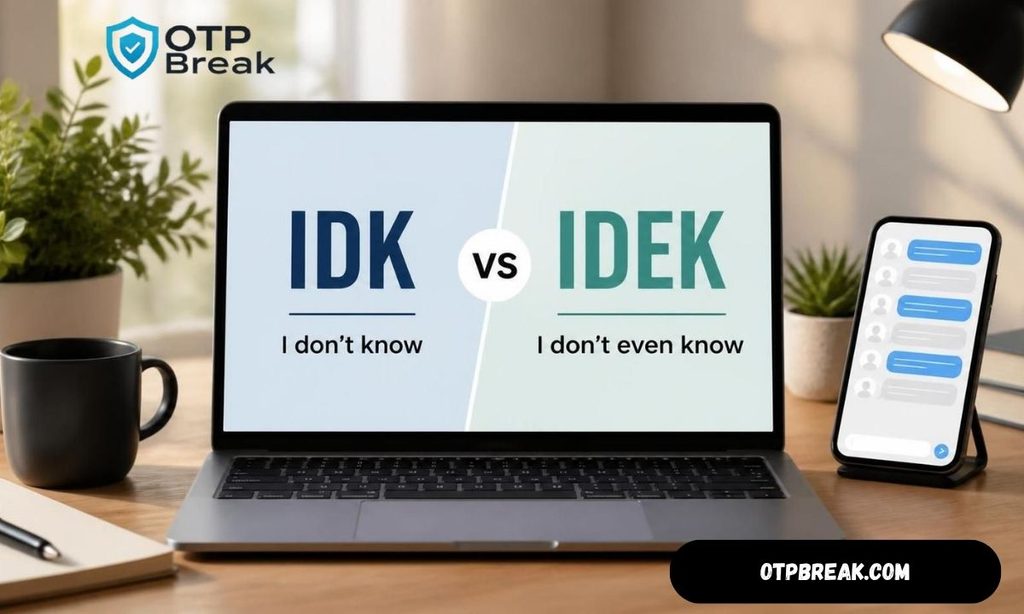
The main difference between IDK and IDEK is emphasis. Both expressions communicate a lack of knowledge, but IDEK generally sounds more expressive.
IDK is a straightforward way to say you do not know something. IDEK adds an extra layer of emotion and can suggest that you are particularly confused or have absolutely no idea what is happening.
Here is a quick comparison:
| Feature | IDK | IDEK |
|---|---|---|
| Full form | I don’t know | I don’t even know |
| Basic meaning | Lack of knowledge | Stronger uncertainty |
| Tone | Usually neutral | Often more expressive |
| Emotion | Uncertainty | Confusion or disbelief |
| Usage | Everyday conversations | Confusing situations |
| Formality | Informal | Informal |
| Text length | Short | Slightly longer |
| Common purpose | Giving an unknown answer | Expressing deeper confusion |
Example of IDK:
Friend: “Where is your phone?”
You: “IDK. Maybe I left it upstairs.”
Example of IDEK:
Friend: “How did your phone end up inside the refrigerator?”
You: “IDEK! I was looking for it everywhere.”
The first response communicates that you do not know the phone’s location. The second expresses surprise and confusion about an unusual situation.
Neither abbreviation is automatically rude or negative. The surrounding words, punctuation, emojis, and relationship between the people determine the actual tone.
How Are IDK and IDEK Used in Text Messages?
People use both abbreviations in everyday digital conversations. They save typing time and make informal communication feel natural.
However, each abbreviation works better in certain situations.
When to Use IDK
Use IDK when you simply do not have an answer or are uncertain about something.
Common situations include:
- When someone asks you a question you cannot answer.
- When you are unsure about your plans.
- When you have not made a decision.
- When you need more information.
- When you want to give a quick response.
Examples:
- “IDK where everyone went.”
- “IDK if the store is still open.”
- “IDK what she wants for her birthday.”
- “IDK, maybe we should ask him.”
- “IDK when I’ll finish my homework.”
These examples show how IDK works as a simple expression of uncertainty.
Read Now : HMJ Meaning in Text
When to Use IDEK
Use IDEK when ordinary uncertainty does not fully express your reaction.
It is particularly useful when something surprises you or leaves you without an explanation.
Common situations include:
- When something unexpected happens.
- When a situation becomes confusing.
- When you cannot understand someone’s behavior.
- When you feel overwhelmed by a problem.
- When something seems too strange to explain.
Examples:
- “IDEK how that happened.”
- “IDEK why everyone is arguing.”
- “IDEK what to say anymore.”
- “IDEK how I passed that difficult exam.”
- “IDEK why he keeps doing that.”
IDEK makes the response more expressive without requiring a lengthy explanation.
IDK vs IDEK Examples in Different Conversations
The easiest way to understand these abbreviations is to see how people use them in realistic conversations.
Here are several examples that show their differences.
Example 1: Talking About Plans
Using IDK:
Alex: “Are we going shopping tomorrow?”
Sam: “IDK. I’ll check my schedule.”
Using IDEK:
Alex: “Do you know where we’re going tomorrow?”
Sam: “IDEK. Nobody has told me anything.”
In the first conversation, Sam has not decided whether to go shopping. In the second, Sam is confused because nobody has shared the plans.
Example 2: Talking About School
Using IDK:
Emma: “What’s the answer to question five?”
Lily: “IDK. I haven’t finished it.”
Using IDEK:
Emma: “How did the teacher get that answer?”
Lily: “IDEK. That explanation made no sense.”
IDK communicates a missing answer, while IDEK expresses stronger confusion.
Example 3: Talking About Relationships
Using IDK:
Mia: “Do you think he likes me?”
Sophie: “IDK. You should ask him.”
Using IDEK:
Mia: “Why did he suddenly stop replying?”
Sophie: “IDEK. That’s really strange.”
The second example shows how IDEK can communicate disbelief about someone’s unexpected behavior.
Example 4: Talking About Technology
Using IDK:
Ryan: “What’s your WiFi password?”
Chris: “IDK. Ask my brother.”
Using IDEK:
Ryan: “Why did the computer restart five times?”
Chris: “IDEK. It’s been acting weird all day.”
The first response simply indicates missing information. The second suggests that the problem is difficult to understand.
Example 5: Talking About Unexpected Events
Using IDK:
Friend: “Who won the competition?”
You: “IDK. I missed the results.”
Using IDEK:
Friend: “How did that tiny dog scare away three huge dogs?”
You: “IDEK 😂”
The second response communicates surprise and amusement.
Example 6: Making Everyday Decisions
Using IDK:
Friend: “Pizza or burgers tonight?”
You: “IDK. Both sound good.”
Using IDEK:
Friend: “What should we eat? We’ve already changed our minds ten times.”
You: “IDEK anymore. You choose!”
Here, IDEK suggests that you have become tired of making the decision.
What Emotions Can IDEK Express?
IDEK does not always communicate the same emotion. Although its literal meaning is “I don’t even know,” people use it in several different ways.
Understanding these emotional meanings helps you avoid misinterpreting someone’s message.
Confusion
Confusion is one of the most common feelings associated with IDEK.
Someone might use it when they cannot understand a situation or find an explanation.
Example:
“IDEK what is happening in this group chat.”
This means the conversation has become difficult to follow.
Frustration
IDEK can also express frustration when someone repeatedly encounters a problem.
Example:
“IDEK why this app keeps crashing.”
The sender is not simply missing information. They may also feel annoyed because the problem continues.
Surprise
People sometimes use IDEK when something unexpected happens.
Example:
“IDEK how we won that game!”
This communicates surprise and disbelief rather than anger.
Indecision
IDEK can express uncertainty when someone feels unable to make a choice.
Example:
“IDEK what outfit to wear tonight.”
The sender might have several options but cannot decide which one is best.
Amusement
In funny conversations, IDEK can communicate laughter or disbelief.
Example:
“IDEK why he tried to dance like that 😂”
The expression makes the message feel playful rather than serious.
Feeling Overwhelmed
Sometimes a situation becomes so complicated that a person does not know where to begin.
Example:
“IDEK where to start with all this work.”
Here, IDEK communicates uncertainty mixed with feeling overwhelmed.
How to Reply When Someone Texts IDK or IDEK
Receiving IDK or IDEK does not mean you should end the conversation. Your response depends on what the person is discussing and how they seem to feel.
Here are some natural ways to reply.
How to Reply to IDK
If someone sends you IDK, you can respond with a friendly question, offer a suggestion, or keep the conversation going.
| Situation | Possible Reply |
|---|---|
| They don’t know the answer | “No worries!” |
| They cannot decide | “You can take your time.” |
| They are unsure about plans | “Let me know when you decide.” |
| They need help | “Want me to help you figure it out?” |
| They seem confused | “Which part are you unsure about?” |
| They don’t know what to do | “Let’s think about it together.” |
For example:
You: “Do you know when the party starts?”
Friend: “IDK.”
You: “No worries. I’ll check with the host.”
This response keeps the conversation simple and friendly.
How to Reply to IDEK
When someone sends IDEK, they may be more confused or surprised than usual.
A helpful response can acknowledge their feelings or ask what happened.
| Situation | Possible Reply |
|---|---|
| They are confused | “What’s confusing you?” |
| They are surprised | “Right? That was unexpected!” |
| They are frustrated | “I understand. That’s annoying.” |
| They cannot decide | “Let’s choose together.” |
| They are joking | “Same, honestly 😂” |
| They are overwhelmed | “Take it one step at a time.” |
For example:
You: “Why did everyone leave early?”
Friend: “IDEK.”
You: “Haha, maybe they had somewhere else to be.”
The response matches the casual tone without making the conversation uncomfortable.
Funny Replies to IDK and IDEK
If you are talking with close friends, a funny response can make the conversation more entertaining.
Try these:
- “Well, that’s helpful!”
- “Mystery of the century.”
- “We’re both confused now.”
- “Google might know!”
- “Same brain, same problem.”
- “Let’s pretend we know.”
- “Welcome to the confused club.”
- “At least we’re confused together.”
Use humorous replies when the other person seems relaxed. If they are genuinely frustrated, a supportive response is usually better.
IDK vs IDEK on Different Social Media Platforms
IDK and IDEK are not limited to regular text messages. They also appear in social media comments, private messages, online communities, and gaming conversations.
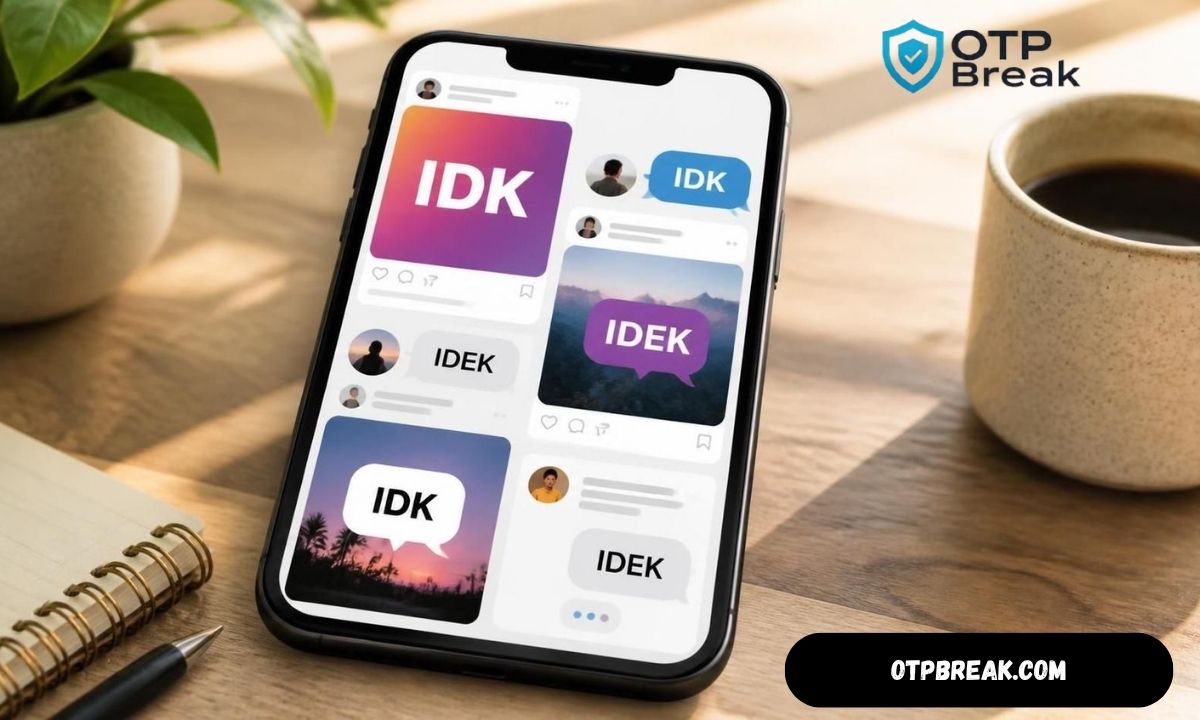
Their basic meanings remain the same, but the context can change how people interpret them.
IDK and IDEK on Snapchat
On Snapchat, people commonly use short abbreviations to keep conversations quick and casual.
Examples:
- “IDK what filter to use.”
- “IDEK why I posted that.”
- “IDK where you are.”
- “IDEK what happened last night.”
A short IDEK response can also communicate a playful reaction to something unexpected.
IDK and IDEK on Instagram
On Instagram, these abbreviations can appear in direct messages, story replies, and comment sections.
Examples:
- “IDK which picture looks better.”
- “IDEK how this reel got so many views.”
- “IDK who that person is.”
- “IDEK why this trend is popular.”
People often combine these expressions with emojis to communicate their feelings.
IDK and IDEK on TikTok
TikTok users frequently use internet slang in comments and videos.
Examples:
- “IDK why this video is so funny.”
- “IDEK what I just watched.”
- “IDK how people come up with these ideas.”
- “IDEK how this trend started.”
The expressions can make reactions shorter and more relatable.
IDK and IDEK on WhatsApp
WhatsApp conversations often involve friends, relatives, classmates, and coworkers.
People use IDK and IDEK in informal chats when discussing plans, sharing information, or reacting to something unexpected.
Examples:
- “IDK when we’re leaving.”
- “IDEK what happened to the group.”
- “IDK, ask your brother.”
- “IDEK how we forgot about the meeting.”
However, when communicating about important work matters, spelling out your response is often clearer.
IDK and IDEK in Online Gaming
Gaming conversations are another place where short abbreviations are useful.
Players often communicate quickly while playing, so typing a short expression can save time.
Examples:
- “IDK where the enemy went.”
- “IDEK how we lost that match.”
- “IDK which weapon to choose.”
- “IDEK how that player survived.”
Both abbreviations help players communicate reactions without writing complete sentences.
Is IDK More Common Than IDEK?
IDK is generally more recognizable and widely used than IDEK.
One reason is its simplicity. It directly replaces the three-word phrase “I don’t know” and works in almost any casual situation involving uncertainty.
IDEK is a more expressive variation. People usually choose it when they want to emphasize that they are especially confused or have no explanation.
For example:
- IDK what happened.
- IDEK what happened!
Both sentences communicate a lack of knowledge. However, the second one can sound more emotional because it includes the word “even” and an exclamation mark.
The difference is not a strict rule. Some people use IDEK casually, while others use IDK even when they feel extremely confused.
Related Text Abbreviations You Should Know
IDK and IDEK belong to a much larger collection of internet abbreviations. Learning a few related expressions can help you understand everyday online conversations.
Here are some commonly used texting terms.
| Abbreviation | Full Form | Meaning |
|---|---|---|
| IDC | I Don’t Care | Something does not matter to you |
| IDRK | I Don’t Really Know | You are somewhat uncertain |
| IKR | I Know, Right? | Strong agreement |
| TBH | To Be Honest | Expressing an honest opinion |
| NGL | Not Gonna Lie | Introducing a candid statement |
| IMO | In My Opinion | Sharing a personal view |
| IMHO | In My Humble Opinion | Giving a personal opinion politely |
| IDFK | I Don’t Freaking Know | Expressing stronger uncertainty |
| IDGAF | I Don’t Give a F*** | Expressing strong indifference |
| SMH | Shaking My Head | Showing disappointment or disbelief |
| WDYT | What Do You Think? | Asking for someone’s opinion |
| WDYM | What Do You Mean? | Asking someone to explain |
| FR | For Real | Expressing agreement or seriousness |
| RN | Right Now | Referring to the present moment |
| NVM | Never Mind | Telling someone to disregard something |
| LMK | Let Me Know | Asking someone to provide information |
These abbreviations can appear alongside IDK and IDEK in everyday messages.
IDK vs IDC
IDK means “I don’t know,” while IDC means “I don’t care.”
Although they look similar, their meanings are completely different.
Example:
- IDK which restaurant is open. (You do not have the information.)
- IDC which restaurant we choose. (You have no strong preference.)
IDK vs IDRK
IDRK means “I don’t really know.”
It communicates uncertainty, often in a slightly softer or less definite way.
Example:
“IDRK if I’ll be available tomorrow.”
The sender is unsure about their availability.
IDK vs IKR
IKR means “I know, right?”
Unlike IDK, which communicates uncertainty, IKR is usually used to agree enthusiastically with someone.
Example:
Friend: “That movie was amazing!”
You: “IKR!”
IDEK vs IDFK
IDEK means “I don’t even know.”
IDFK is commonly used to mean “I don’t freaking know” or a more explicit version of that phrase. The exact expansion depends on the sender.
IDEK is generally the more appropriate option when you want to emphasize confusion without using profanity.
IDEK vs IDGAF
IDEK and IDGAF have very different meanings.
IDEK communicates confusion or uncertainty. IDGAF communicates that something does not matter to the sender, using an explicitly profane expression.
Example:
- IDEK what happened. (I am confused.)
- IDGAF what they think. (Their opinion does not matter to me.)
Understanding this distinction can prevent misunderstandings in online conversations.
Is IDK or IDEK Rude?
Neither IDK nor IDEK is automatically rude. Both are informal abbreviations that people use in ordinary conversations.
However, the way someone sends them can affect how the message feels.
For example:
“IDK, maybe ask someone else.”
This could sound neutral or slightly dismissive, depending on the conversation.
On the other hand:
“IDEK anymore 😭”
This may communicate frustration, sadness, or playful confusion.
Consider these factors before interpreting someone’s message:
- Punctuation: A period can sometimes make a short response feel more direct.
- Capitalization: All capital letters may add emphasis, although many people simply type abbreviations in uppercase.
- Emojis: A laughing emoji can make the message playful, while a frustrated emoji can suggest annoyance.
- Relationship: Close friends may use short responses without intending to sound unfriendly.
- Conversation history: Earlier messages often provide clues about the sender’s actual feelings.
If you are unsure, ask a simple follow-up question instead of assuming the person is upset.
Should You Use IDK and IDEK in Professional Conversations?
IDK and IDEK are best suited to informal communication.
You can comfortably use them when messaging friends, chatting with classmates, or participating in casual online discussions.
However, they are usually not the best choices for professional emails, formal documents, business proposals, or important workplace messages.
Professional communication benefits from clarity and complete sentences.
Instead of writing:
“IDK when the report will be ready.”
You could write:
“I’m not sure when the report will be ready, but I’ll confirm the timeline.”
Instead of:
“IDEK why the system isn’t working.”
You could write:
“I’m currently investigating the issue and haven’t identified the cause yet.”
These alternatives sound more professional and communicate the same basic information.
Better Alternatives to IDK and IDEK
If you want to sound clearer or more professional, consider these alternatives:
| Informal Expression | Better Alternative |
|---|---|
| IDK | I’m not sure. |
| IDEK | I really don’t know. |
| IDK why | I don’t know the reason. |
| IDEK what happened | I haven’t figured out what happened. |
| IDK yet | I haven’t confirmed that yet. |
| IDEK what to do | I’m unsure how to proceed. |
The best choice depends on your audience and the situation.
Why Do People Use IDK and IDEK Instead of Full Sentences?
People use abbreviations because digital conversations often prioritize speed and convenience.
Typing three or four letters is easier than writing an entire sentence, especially when someone is having a quick conversation.
There are several reasons these expressions remain useful.
They Save Time
Short abbreviations allow people to communicate quickly.
Instead of typing “I don’t know,” someone can simply write IDK.
They Make Conversations Casual
Texting with friends usually does not require formal grammar or complete sentences.
Abbreviations make messages feel more relaxed and natural.
They Communicate Emotions
IDEK can communicate more than a lack of information. It can also express confusion, surprise, or frustration.
This makes it useful when someone wants to share a reaction without explaining everything.
They Fit Social Media Culture
Online conversations often include abbreviations, emojis, memes, and shortened expressions.
IDK and IDEK fit naturally into this communication style.
They Are Easy to Understand
Both abbreviations have recognizable meanings in internet slang.
Once you learn their full forms, you can understand them in most everyday conversations.
How Have IDK and IDEK Evolved in Online Communication in 2026?
Texting language continues to change as social media, messaging apps, and online communities evolve.
However, familiar abbreviations such as IDK and IDEK remain useful because their meanings are simple and easy to understand.
In 2026, these expressions continue to fit several common digital communication habits.
Short Replies Remain Popular
People frequently use short messages in private chats and social media comments.
IDK is convenient when someone wants to communicate uncertainty without providing a detailed explanation.
IDEK serves a similar purpose but can express a stronger reaction.
Emojis Add Context
Modern digital communication relies heavily on emojis to clarify emotions.
For example:
- “IDK 🤷” suggests uncertainty or indifference.
- “IDEK 😂” suggests confusion mixed with amusement.
- “IDEK 😭” can express dramatic frustration or disbelief.
- “IDK 😅” can make an uncertain response feel lighthearted.
An emoji does not change the literal definition, but it can influence how the recipient interprets the message.
AI and Online Conversations Encourage Clearer Language
AI assistants, automated chat systems, and customer support platforms have made clear digital communication increasingly important.
Although IDK and IDEK remain understandable in casual chats, complete sentences are often more useful when asking an AI tool for information or explaining a complicated problem.
For example, writing “IDK why my laptop won’t connect” is understandable.
However, providing additional details about the device, connection, and error message will usually produce a more helpful answer.
Meanings Depend on Context
A growing variety of online communities brings people with different communication habits together.
Someone may use IDEK as a simple casual response, while another person may use it to express genuine frustration.
There is no universal rule that determines exactly how emotional an abbreviation must sound.
The safest approach is to consider the entire conversation rather than interpreting three or four letters in isolation.
Importantly, neither IDK nor IDEK has acquired a completely different universal meaning in 2026. Their established definitions remain the most useful interpretations.
Common Mistakes to Avoid When Using IDK and IDEK
Although these abbreviations are easy to understand, people sometimes confuse their meanings or use them in situations where they are not appropriate.
Here are some mistakes worth avoiding.
Confusing IDK With IDEK
Remember that IDK means “I don’t know,” while IDEK means “I don’t even know.”
The extra word adds emphasis.
Assuming IDEK Always Means Anger
IDEK does not automatically mean someone is angry or irritated.
It can express surprise, amusement, confusion, or simple uncertainty.
Using Abbreviations in Formal Writing
Avoid using IDK and IDEK in academic essays, formal reports, and professional applications.
Write the complete phrase instead.
Assuming Every Short Reply Is Rude
A short response does not necessarily indicate that someone is annoyed.
The sender may simply be busy or responding quickly.
Ignoring Conversation Context
Always consider what the other person was discussing before deciding what their message means.
For example, IDEK in a funny conversation can have a completely different tone from IDEK during a serious discussion.
Frequently Asked Questions About IDK vs IDEK
What Does IDK Stand For in Texting?
IDK stands for “I don’t know.” People use it in text messages, social media comments, and online chats when they are unsure about something or do not have an answer.
What Does IDEK Stand For in Texting?
IDEK stands for “I don’t even know.” It is an informal abbreviation that expresses stronger uncertainty, confusion, surprise, or disbelief.
What Is the Difference Between IDK and IDEK?
IDK means “I don’t know,” while IDEK means “I don’t even know.” The additional word “even” adds emphasis, making IDEK sound more expressive in many conversations.
Is IDEK Stronger Than IDK?
Generally, yes. IDEK often communicates deeper confusion or surprise than IDK. However, the difference depends on the sender’s personal texting style and the context.
Does IDEK Mean I Don’t Even Know?
Yes. IDEK is the shortened form of “I don’t even know.” It is commonly used in informal text messages and internet conversations.
What Does IDK Mean From a Girl?
When a girl texts IDK, she generally means “I don’t know.” She might be unsure about something, unable to answer a question, or undecided about a situation.
However, the abbreviation alone does not reveal her feelings or intentions. The surrounding conversation matters.
What Does IDEK Mean From a Guy?
When a guy sends IDEK, he usually means “I don’t even know.” He might be confused, surprised, unsure, or unable to explain something.
It does not automatically indicate disinterest or frustration.
Does IDEK Mean Someone Is Annoyed?
Not necessarily. IDEK can express annoyance, but it can also communicate surprise, amusement, or ordinary confusion. Look at the rest of the message to understand the intended tone.
Is IDK Considered Slang?
Yes. IDK is an informal internet and texting abbreviation. It is widely understood in digital conversations but is generally unsuitable for formal writing.
Can I Use IDEK in a Professional Email?
It is better to avoid IDEK in professional emails. Write “I’m not sure” or “I don’t have that information yet” instead. These expressions sound clearer and more professional.
What Does IDEK Mean on Snapchat?
On Snapchat, IDEK means “I don’t even know.” People use it in private messages and casual conversations to express confusion, surprise, or uncertainty.
What Does IDK Mean on Instagram?
On Instagram, IDK means “I don’t know.” It appears in direct messages, comments, and story replies when someone does not know an answer or cannot make a decision.
What Does IDEK Mean With a Laughing Emoji?
IDEK with a laughing emoji usually communicates playful confusion or disbelief. For example, “IDEK 😂” can mean that something is so strange or funny that the sender cannot explain it.
Is IDEK the Same as IDFK?
No. IDEK means “I don’t even know,” while IDFK is commonly used as a more explicit variation of “I don’t know.” IDEK is generally more suitable for everyday conversations.
Is IDK Still Used in 2026?
Yes. IDK remains a recognizable abbreviation in texting, social media, and online communication. Its basic meaning has not changed.
Can IDK and IDEK Be Used in the Same Sentence?
Yes. You can use both expressions in a conversation, but using them together in the same sentence is usually unnecessary.
For example: “IDK what happened, and IDEK why everyone is confused.”
This is understandable, although a shorter response may sound more natural.
Conclusion
IDK and IDEK are similar texting abbreviations, but they communicate slightly different levels of emphasis. IDK means “I don’t know” and expresses ordinary uncertainty. IDEK means “I don’t even know” and often communicates deeper confusion, surprise, or frustration.
Both are useful in casual conversations, social media messages, and online chats. Just remember that context determines the actual tone. Use IDK for a simple unknown answer and IDEK when you want to express a stronger reaction.

David is the creator and author behind Healthy Leeks, a platform focused on grammar, writing skills, and English language learning. Passionate about clear communication and effective writing, David shares practical grammar tips, easy-to-follow language guides, and educational content to help readers improve their English with confidence.