“Good day” gets the job done — but it barely scratches the surface of what you can express. Whether you’re opening a professional email, starting a business call, or greeting a colleague in the hallway, the words you choose set the emotional tone of the entire interaction. The right greeting makes people feel seen. The wrong one can feel robotic, stiff, or forgettable.
This article gives you 29+ polished, natural alternatives to “good day” — organized by tone, context, and purpose — along with usage tips and real examples so you know exactly when and how to use each one. Whether you’re aiming for formal professionalism or warm friendliness, there’s a phrase here that fits.
When Should You Use These Alternatives?
“Good day” works fine as a neutral, time-tested greeting — but it can come across as overly formal, outdated, or even cold in modern communication. Here’s when switching to an alternative actually matters:
| Situation | Why an Alternative Helps |
| Professional emails | Elevates your tone and shows polish |
| Customer service interactions | Creates warmth and builds rapport |
| First-time outreach or cold emails | Sets a positive, personable first impression |
| Team messages or Slack updates | Feels more natural than a stiff “good day” |
| Networking or follow-up messages | Avoids sounding generic or templated |
| Time-specific conversations | Lets you tailor the greeting to the moment |
A key principle: match your greeting to your relationship and context. What works for a client email may feel out of place in a quick Slack message to a teammate. The alternatives below are tagged with tone indicators — formal, semi-formal, casual, or warm — so you can pick the right one every time.
Better Ways to Say “Good Day” — 29+ Natural Alternatives
1. “Hope you’re having a great day.”
Tone: Warm, semi-formal Best for: Emails to colleagues, clients, or acquaintances
This is one of the most natural replacements for “good day.” It expresses genuine care without sounding stiff. Unlike a flat greeting, it signals that you’re thinking about the other person’s experience — not just opening a conversation out of obligation.
Example: “Hope you’re having a great day! I’m reaching out to follow up on last week’s proposal.”
2. “Wishing you a wonderful day.”
Tone: Formal, polished Best for: Professional emails, customer communications, sign-offs
This phrase adds a layer of warmth to formal communication. It’s especially effective as an email sign-off or when paired with a thank-you. It sounds refined without being cold.
Example: “Thank you for your patience — wishing you a wonderful day ahead.”
3. “Hope your day is going well.”
Tone: Semi-formal, friendly Best for: Mid-day emails, workplace messages, client follow-ups
A gentle check-in that doubles as a greeting. It acknowledges the recipient’s current moment rather than just opening a transaction. Works well when you want to sound personable without losing professionalism.
Example: “Hope your day is going well. I wanted to share a quick update on the project.”
4. “Good morning / Good afternoon / Good evening.”
Tone: Formal, universally appropriate Best for: Any professional setting — emails, meetings, presentations
Time-specific greetings are among the most reliable alternatives to “good day.” They’re precise, polished, and show awareness of context. Use the correct one based on your time zone — or your recipient’s if you know it.
Example: “Good afternoon, Sarah. Thank you for joining today’s call.”
5. “Hope your day starts on a positive note.”
Tone: Warm, optimistic Best for: Early-morning emails, motivational messages, onboarding communications
This phrase works best at the start of a workday. It’s encouraging without being over the top, and it implies you want the recipient’s entire day to go well — not just the next five minutes.
Example: “Good morning! Hope your day starts on a positive note — here’s a quick overview of today’s agenda.”
6. “Hope today treats you well.”
Tone: Casual, friendly Best for: Informal workplace chats, messages to familiar clients, team updates
Slightly more playful than the standard alternatives, this phrase carries a warm, human quality. It’s ideal when you have an established relationship and want to sound natural rather than scripted.
Example: “Hey James, hope today treats you well! Just checking in on the deadline.”
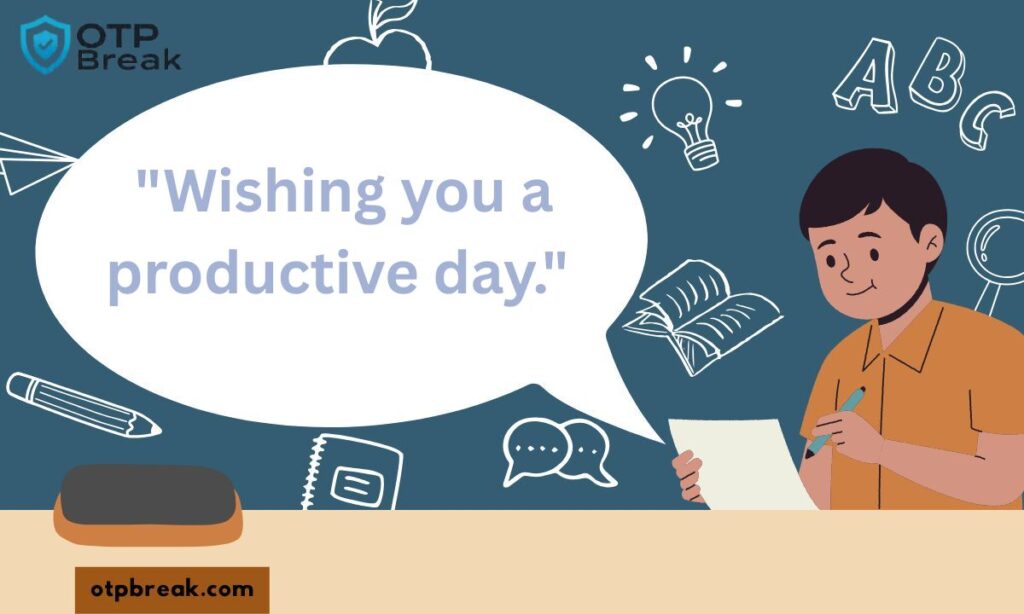
7. “Wishing you a productive day.”
Tone: Professional, focused Best for: Workplace emails, project communications, B2B correspondence
When the context is work-oriented, this phrase is a strong choice. It acknowledges professional priorities and signals respect for the recipient’s time. It’s particularly fitting for colleagues or clients in demanding roles.
Example: “Thanks for the quick turnaround — wishing you a productive day ahead.”
8. “Hope your day is filled with positivity.”
Tone: Uplifting, warm Best for: Customer service, wellness-related communication, supportive messages
This phrase goes a step beyond basic politeness. It’s expressive and thoughtful — ideal when you want your message to leave a positive emotional impression. Avoid it in very formal or high-stakes business contexts where it may seem too light.
Example: “Thank you for reaching out! Hope your day is filled with positivity.”
9. “Trust you’re having a pleasant day.”
Tone: Formal, British English Best for: Formal business letters, senior executive emails, international correspondence
This phrase carries a distinctly formal, polished tone — common in British professional writing. “Trust” here means “I believe” or “I hope,” which gives it a confident, respectful feel.
Example: “Dear Mr. Collins, trust you’re having a pleasant day. I’m writing regarding our upcoming agreement.”
10. “Hope everything’s going smoothly today.”
Tone: Semi-formal, reassuring Best for: Follow-up emails, project check-ins, messages to busy contacts
This phrase works especially well when you know the recipient has a full schedule. It shows empathy — you’re not assuming everything is perfect, just hoping it’s going well.
Example: “Hi Priya, hope everything’s going smoothly today. Just wanted to circle back on the timeline we discussed.”
11. “Hope your day is off to a great start.”
Tone: Energetic, warm Best for: Morning emails, team announcements, motivational messages
Best deployed in the first half of the day, this phrase is both encouraging and professional. It sets an upbeat tone without feeling forced.
Example: “Good morning, everyone — hope your day is off to a great start! Here’s the weekly update.”
12. “Hope you have an enjoyable day.”
Tone: Polite, slightly formal Best for: Customer emails, event communications, professional farewells
A clean and considerate alternative that emphasizes enjoyment rather than just productivity. Good for service industries or any context where you want the recipient to feel appreciated.
Example: “It was great speaking with you — hope you have an enjoyable day!”
13. “Sending you good wishes for the day.”
Tone: Warm, sincere Best for: Personal-professional emails, messages to clients you know well
This phrase carries genuine warmth. The word “sending” implies intention — you’re actively directing goodwill toward the person, which can make the message feel more thoughtful.
Example: “Thanks for your continued support — sending you good wishes for the day.”
14. “Hope you’re having a pleasant morning / afternoon.”
Tone: Formal, time-specific Best for: Business emails, correspondence with executives, first-contact messages
A more formal, time-aware version of “hope you’re having a great day.” Using “pleasant” elevates the tone while keeping the sentiment natural.
Example: “Dear Dr. Reeves, hope you’re having a pleasant morning. I’m writing to confirm our meeting this Thursday.”
15. “Hope your day is full of opportunities.”
Tone: Motivational, professional Best for: Networking emails, sales outreach, entrepreneurship contexts
More ambitious than the average greeting, this phrase signals that you see the recipient as someone going places. It’s ideal in growth-focused professional environments.
Example: “Hi Michael — hope your day is full of opportunities! I’d love to connect and explore a potential collaboration.”
16. “Hope the day brings you good energy.”
Tone: Casual-warm, modern Best for: Creative industries, startups, informal professional contexts
A contemporary, slightly less conventional phrase that resonates well in modern workplaces. It’s fresh without being too informal.
Example: “Happy Monday, team! Hope the day brings you good energy and momentum.”
17. “Wishing you a bright and cheerful day.”
Tone: Light, warm Best for: Customer service, retail communications, friendly emails
This phrase works well when you want to inject warmth and brightness into your message. It’s best used in industries where a friendly, approachable tone is valued.
Example: “Thank you for your order! Wishing you a bright and cheerful day.”
18. “Hope your day is going better than expected.”
Tone: Empathetic, conversational Best for: Messages to contacts who may be dealing with challenges; informal professional conversations
This phrase acknowledges reality — not every day goes as planned — and expresses hope without empty cheerfulness. It reads as more honest and relatable than a generic greeting.
Example: “Hey Lena, hope your day is going better than expected. Wanted to check in about the proposal.”
19. “Hope you’re enjoying your day so far.”
Tone: Friendly, semi-formal Best for: Workplace conversations, midday emails, customer interactions
“So far” grounds the greeting in the present moment, making it feel immediate and genuine. It invites the reader to reflect on their day in a positive way.
Example: “Hi there! Hope you’re enjoying your day so far — your package has just shipped.”
20. “Hope your day is filled with success.”
Tone: Professional, aspirational Best for: B2B emails, performance-driven industries, sales communications
Results-focused and confidence-boosting, this phrase signals that you believe in the recipient’s capabilities. Best used in professional contexts where achievement matters.
Example: “Thanks for your time — hope your day is filled with success on the deal!”
21. “Hope your day is bright and positive.”
Tone: Warm, uplifting Best for: Email newsletters, customer appreciation messages, supportive communication
A simple yet expressive wish. “Bright and positive” covers both the emotional and practical dimensions of a good day — making it broader and more personal than just “productive.”
Example: “Thank you for being a loyal member! Hope your day is bright and positive.”
22. “Hope your day goes smoothly from start to finish.”
Tone: Thoughtful, considerate Best for: Messages to colleagues managing heavy workloads, project communications
This phrase covers the whole arc of someone’s day, which makes it feel more considered than a quick throwaway greeting. It shows you understand that their day matters beyond the current email.
Example: “Appreciate your help with the report — hope your day goes smoothly from start to finish.”
23. “Hope today brings you something good.”
Tone: Genuine, warm Best for: Personal-professional messages, thoughtful follow-ups
Vague in the best way — this phrase leaves room for the recipient to interpret what “something good” means for them. That open-endedness makes it feel sincere rather than scripted.
Example: “It was great catching up — hope today brings you something good.”
24. “Good to see you today.”
Tone: Warm, in-person Best for: Face-to-face meetings, video calls, workplace greetings
This one works specifically in live interactions. It’s sincere and direct — a natural substitute for “good day” when you’re actually in someone’s presence.
Example: “Good to see you today, David — let’s dive right in.”
25. “It’s a pleasure connecting with you today.”
Tone: Formal, professional Best for: First meetings, networking events, formal introductions
This phrase expresses genuine appreciation for the interaction. It elevates the moment and signals respect, making it ideal for first impressions or high-stakes professional meetings.
Example: “It’s a pleasure connecting with you today — I’ve been looking forward to this conversation.”
26. “Hope your morning / afternoon is going wonderfully.”
Tone: Formal, time-specific Best for: Business emails, client communications, formal correspondence
A refined time-specific greeting that pairs elegantly with professional contexts. “Wonderfully” adds a touch of warmth without sacrificing polish.
Example: “Good afternoon, Mr. Torres — hope your afternoon is going wonderfully. I’m following up regarding your inquiry.”
27. “Hope you have a refreshing day ahead.”
Tone: Positive, forward-looking Best for: Monday-morning emails, post-holiday messages, motivational team communications
“Refreshing” implies renewal — perfect for the start of a week or after a break. It suggests you want the recipient to experience a day that re-energizes them, not just an average one.
Example: “Welcome back from the long weekend! Hope you have a refreshing day ahead.”
28. Good Day in Email — How to Use These Phrases Effectively
Using these alternatives in email isn’t just about swapping one phrase for another. Here’s how to integrate them naturally:
As an opening line:
“Hope you’re having a great day — I’m reaching out to discuss our upcoming partnership.”
As a sign-off:
“Thanks again for your time. Wishing you a wonderful day ahead!”
As a mid-email transition:
“Before I dive in — hope your day is going well so far.”
Quick reference table for email use:
| Phrase | Best Position | Formality Level |
| “Hope you’re having a great day.” | Opening line | Semi-formal |
| “Wishing you a wonderful day.” | Sign-off | Formal |
| “Trust you’re having a pleasant day.” | Opening line | Highly formal |
| “Hope today treats you well.” | Opening or closing | Casual |
| “Wishing you a productive day.” | Sign-off | Professional |
| “It’s a pleasure connecting with you today.” | First meetings | Formal |
Conclusion
“Good day” is reliable — but reliability without intentionality is just habit. The right greeting does more than open a conversation; it tells someone how you see them, what you value, and how thoughtful your communication is.
Whether you’re managing client relationships, writing daily team updates, or simply trying to start a professional email on the right note, choosing a well-matched phrase from this list immediately upgrades the quality of your communication. Match the tone to the context, keep it natural, and vary your language so your messages feel fresh — not formulaic.

David is the creator and author behind Healthy Leeks, a platform focused on grammar, writing skills, and English language learning. Passionate about clear communication and effective writing, David shares practical grammar tips, easy-to-follow language guides, and educational content to help readers improve their English with confidence.